
Key Takeaways
- Spring and early summer often favor sellers, but local factors can yield different optimal selling windows.
- Market forces like mortgage rates and housing inventory levels are as pivotal as the season itself.
- Local expertise is vital to maximizing results—align your strategy with current neighborhood trends.
Table of Contents
- Seasonal Trends in Home Selling
- Economic Factors Affecting the Market
- Regional Variations in Optimal Selling Times
- Strategies for Timing Your Home Sale
- Consulting Local Experts
- Conclusion
Selling a home is one of the most impactful financial choices a homeowner can make. Choosing the optimal moment can significantly increase your sale price and reduce the time the property spends on the market. Many sellers want to know the “perfect” moment, yet the answer isn’t always straightforward. For those looking to maximize their results, connecting with a knowledgeable St Paul MN real estate agent Adam Duckwall can provide essential guidance and a customized approach based on local trends and expert negotiation skills.
While broad advice points to spring and early summer as ideal selling seasons, savvy sellers know to look beyond the calendar. Local market factors, neighborhood-specific cycles, and even microeconomic conditions like mortgage rates can change the game entirely. Knowing how to interpret these elements gives homeowners an undeniable edge in an often-competitive landscape.
Economic shifts and unique patterns within each market affect the timing equation, and what works well in one city might not hold true in another. That’s why local expertise is crucial—an agent who stays on top of current trends will help you anticipate seasonal behaviors, shifts in demand, and competitive pricing strategies.
With these complexities in mind, aligning your listing strategy with market intelligence ensures you aren’t leaving money on the table. This comprehensive guide covers key seasonal, economic, and local factors to help you time your home sale as effectively as possible.
Seasonal Trends in Home Selling
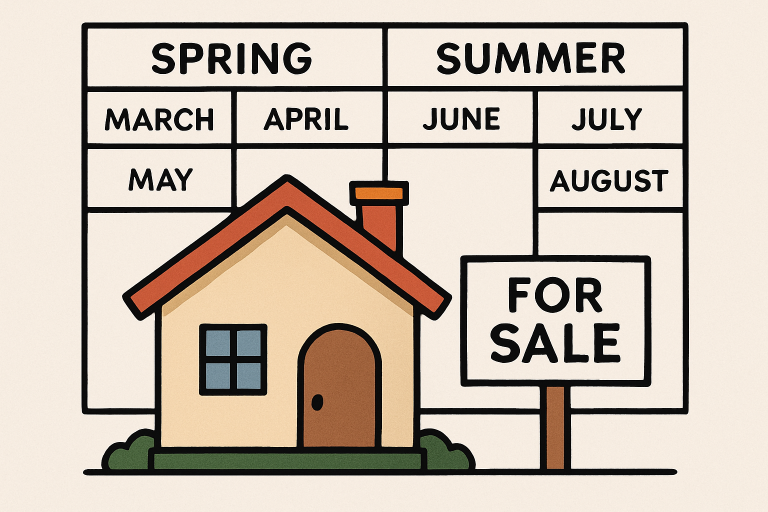
Historically, spring and early summer are the most popular times to sell a house, particularly in colder climates, where homebuyers prefer to shop in milder weather. The increase in daylight hours and renewed buyer activity following winter prompt a surge in property listings and open house attendance. Nationwide, homes listed between March and June consistently command faster offers and higher sales prices. According to Bankrate, May consistently posts the strongest results for sellers in most markets.
These trends occur for reasons beyond the thermostat. Families with children want to move and settle before the new school year, and the ease of house hunting without snow or cold adds to the appeal. However, this flurry of activity also brings more competition, with plenty of new listings joining the market at the same time—making strategic staging and pricing especially important.
Economic Factors Affecting the Market
Even peak seasonality can be impacted or even reversed by broader economic forces. Interest rates, supply-and-demand dynamics, and the overall state of the economy can either stoke or dampen buyer enthusiasm. When mortgage rates are low, more buyers can afford higher price points, fueling demand and potentially leading to bidding wars. Conversely, when rates climb, affordability drops, and buyers may pause their searches, leading to longer days on the market and downward pressure on prices.
Another crucial factor is inventory—the total number of homes for sale. In low-inventory or “seller’s markets,” homes can sell out at premium prices regardless of season, as outlined in a recent Forbes Advisor analysis. Tracking these economic signals alongside local trends is vital to understanding buyer psychology and positioning your property competitively.
Regional Variations in Optimal Selling Times
There’s no such thing as a universal “best month” to sell—it’s highly regional. For example, in the Twin Cities area, data frequently shows that homes listed in late May net higher sale prices—up to 2.9%, according to local studies. Meanwhile, markets in warmer regions like Florida or Arizona might see homebuying activity spike in winter when seasonal residents (snowbirds) are searching for properties.
Urban areas with large universities might experience their own mini-markets around graduation and rental turnovers. Similarly, highly seasonal economies—such as ski towns or beach communities—can experience significant swings in demand tied to the tourist calendar.
Micro-Market Factors
Even suburbs within the same metropolitan area can see drastically different patterns, dictated by school schedules, local employment, community amenities, or anticipated developments. Reviewing hyper-local statistics, like average days on market for your neighborhood, gives a clearer picture than city- or state-wide data alone.
Strategies for Timing Your Home Sale
- Analyze Local Market Data: Delve into recently sold comparable homes—often called “comps”—and look for trends in sales prices, average time on market, and seasonal fluctuations. Local real estate boards and websites usually publish monthly market reports that are helpful.
- Monitor Economic Indicators: Pay attention to interest rate trends and current inventory levels. High rates or significant inventory surges may indicate a lull, while tight inventory and steady rates could mean increased buyer competition.
- Assess Personal Circumstances: Life events such as job changes, school year transitions, or expanding families should align with your selling strategy. Sometimes, a personal timeline will outweigh all market forecasts—selling when it’s right for you is just as important as waiting for an ideal market moment.
Consulting Local Experts
One of the smartest moves you can make is to engage a trustworthy, locally-based real estate agent. They can help you interpret the most relevant statistics, anticipate upcoming trends, and design a tailored marketing plan specific to your property and neighborhood. Comprehensive insight from a real estate professional helps sellers outmaneuver less-informed competition and confidently navigate market ups and downs.
Conclusion
The ideal time to sell your home balances an understanding of national trends, local market realities, and your personal priorities. From leveraging spring’s peak selling season to capitalizing on low housing inventories or favorable interest rates, the formula for success is never one-size-fits-all. By staying attentive to both the big picture and neighborhood specifics—ideally with an experienced agent by your side—you’ll be positioned to sell swiftly and profitably in any market.